


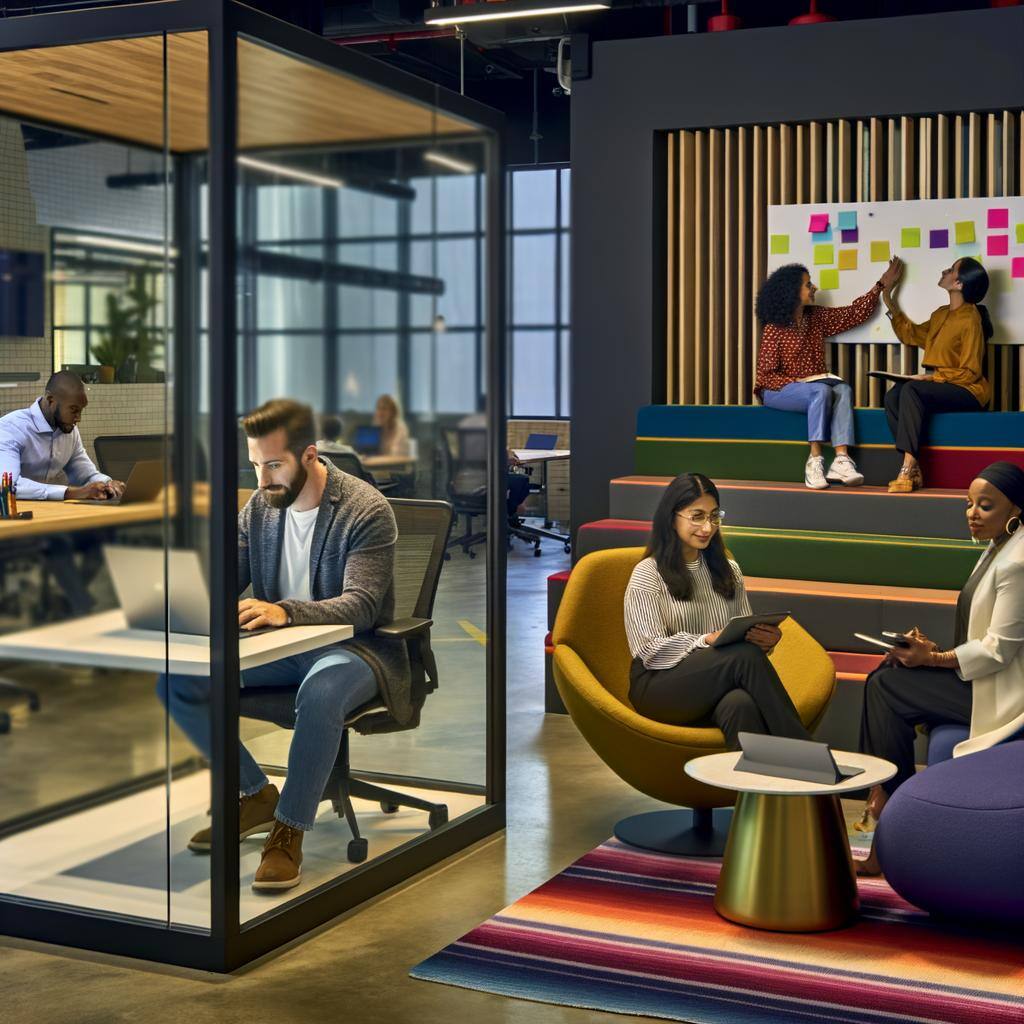
Work-Life Harmony: Finding Balance in Flexible Spaces
Published by estaie on
May 23, 2024 3:00:00 PM
The boundaries between work and personal life are frequently blurred in today's fast-paced environment, which makes it difficult for many people to strike a healthy balance. Work-life harmony, rather than work-life balance, is the new term for the trend of remote work, co-working spaces, and flexible office schedules. This article addresses the importance of striking this balance and how important flexible spaces are to doing so.
The Shift from Work-Life Balance to Work-Life Harmony
Work-life balance has always involved drawing a distinct line between obligations related to work and personal obligations. The plan was to set aside particular hours for work and use the remaining time for leisure, family time, and personal pursuits. However, when job demands grew this strict separation frequently proved to be difficult and unpleasant.
Conversely, work-life harmony values the seamless and less divided integration of work and personal life. It acknowledges that the lines between life and work are sometimes blurry and that it is more practical and satisfying to get at a place where both may coexist peacefully.
The Role of Flexible Spaces
Co-working spaces, hot desks, and home offices are examples of flexible work spaces that are becoming increasingly important for promoting work-life balance. These areas provide an atmosphere that is flexible enough to accommodate each person's evolving demands, enabling them to customize their work environments to fit their lifestyles. Here are some ways that adaptable work spaces promote work-life balance:
1. Enhanced Productivity
The goal of flexible spaces is to maximize productivity. For example, co-working spaces offer a business setting with few distractions, encouraging concentration and productivity. The availability of private rooms, conference rooms, and public spaces facilitates individuals in selecting the most suitable environment for their current activity, hence enhancing total productivity.
2. Improved Work-Life Integration
People with flexible workplaces may easily combine their personal and professional lives. People can better manage their time when they have the choice to work from several places, such a co-working space, a local café, or their home office. This adaptability makes it possible to better manage personal obligations without sacrificing job obligations.
3. Boosted Creativity and Innovation
Changing surroundings may greatly promote innovation and creativity. A lot of flexible spaces have interesting and varied designs that encourage new thoughts and viewpoints. In co-working spaces, networking with experts from various sectors may foster creative problem-solving and collaborative opportunities.
4. Enhanced Well-being
Well-being and work-life balance are strongly related. Provided that they offer features like exercise centers, relaxation rooms, and wellness programs, flexible spaces frequently encourage a healthy work environment. Having flexibility in where and when one works lowers stress and burnout, improving both mental and physical health.
5. Networking and Community Building
Co-working spaces bring professionals and like-minded individuals together to create a feeling of community. This feeling of community and the chance to network with others may reduce the loneliness that remote workers sometimes feel. Within these groups, establishing connections and relationships may promote professional and personal development.
Tips for Achieving Work-Life Harmony in Flexible Spaces
-
Set Clear Boundaries: Define specific work hours and personal time to ensure a balance between the two. Communicate these boundaries to colleagues and family members.
-
Create a Dedicated Workspace: Even in flexible environments, having a designated workspace helps maintain focus and productivity. Personalize this space to make it comfortable and conducive to work.
-
Take Regular Breaks: Incorporate short breaks into your routine to recharge and avoid burnout. Use these breaks to engage in activities that promote relaxation and well-being.
-
Leverage Technology: Utilize tools and apps that enhance productivity and time management. These can help streamline tasks and minimize time spent on administrative duties.
-
Engage in Community Activities: Participate in events and activities organized by co-working spaces to build connections and gain new insights. Networking can provide both emotional support and professional opportunities.
-
Practice Self-Care: Prioritize self-care by engaging in activities that promote physical and mental health. This can include exercise, meditation, hobbies, and spending time with loved ones.
The search of work-life harmony is an ongoing, dynamic effort. The flexibility and adaptation required to successfully combine work and personal life are provided by flexible spaces. Through the efficient utilization of these spaces, people may establish a balanced and satisfying way of life that supports their career goals and overall health. Adopting the work-life harmony approach improves life quality and productivity, resulting in a more balanced and fulfilled live.
At estaie, we prioritize accommodations that offer work-life harmony. Here are some of our accommodations that are near co-working spaces:
- Suha JBR apartments is only a 10 minute drive to Nook co-working space.
- Suha Mina Rashid hotel apartments is only a 7 minute drive from DhanGuard Business Centre/Co-working space.
- Al Jaddaf Rotana Suite Hotel is only an 11 minute drive from SpaceBox co-working space.
- Millennium Central Downtown is only a 12 minute drive from Servcorp Boulevard Plaza - Co-working, Offices.
- Arjaan by Rotana Dubai Media City is only a 5 minute walk from DQuarters co-working space.
Find your perfect work-life harmony at estaie now.